What does KLIC do?

Connect
Connect
proven ideas and interventions
for health equity
with countries in need

Support
Support the development
of strategies for introducing,
testing, and scaling up
pro-equity innovations

Inspire
Inspire the design
of missing pro-equity solutions required to overcome
health equity challenges

Build
Build
sustainability partnerships for continuous modernization
of health systems
What is KLIC?
Established by GaneshAID, the Knowledge Lab for Innovation Community (KLIC) is a pioneering think tank and network committed to informing countries about available health innovations and accelerating their evidence-based implementation and scale-up at the country level. We aim to strengthen countries’ capacity to lead and manage the implementation and scale-up of pro-equity innovations, fostering a country-led movement of health system modernization.
Mission
Nurturing innovative thinking for novel solutions to address immunization equity obstacles.
Vision
Inspire all Governments with impactful innovations for modern health and immunization systems that reach all communities.
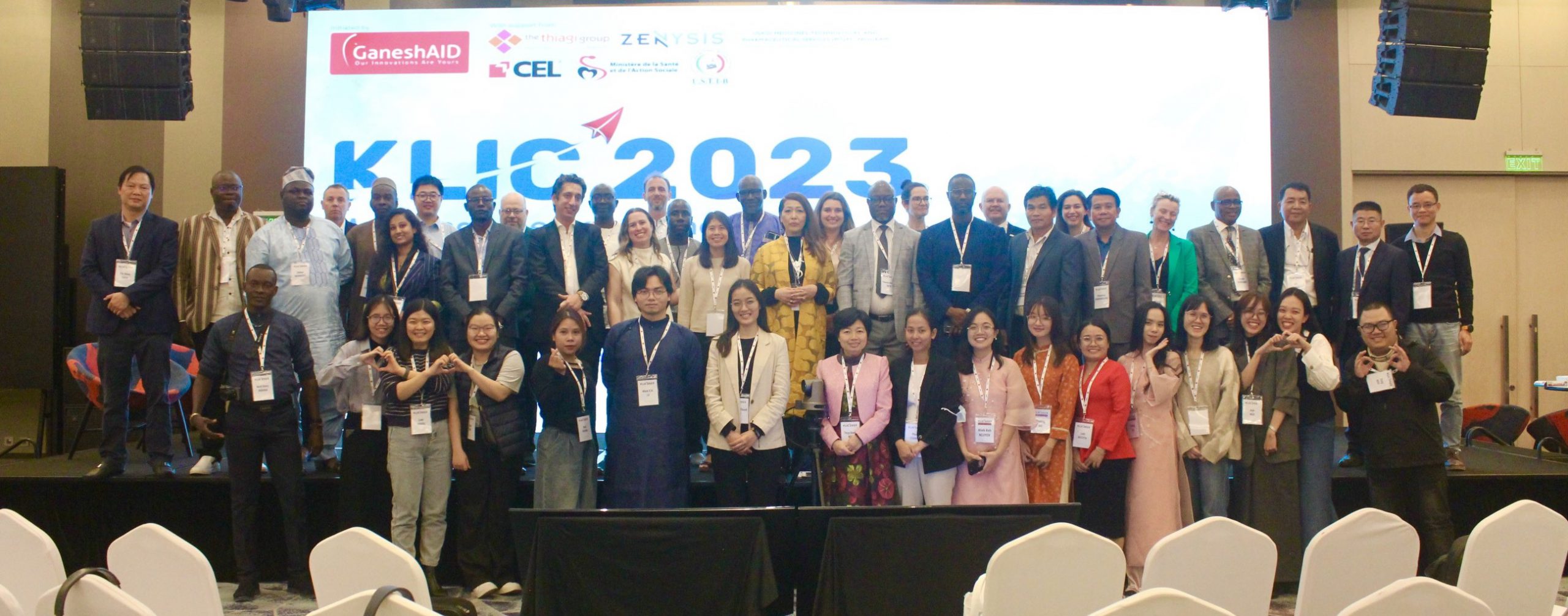
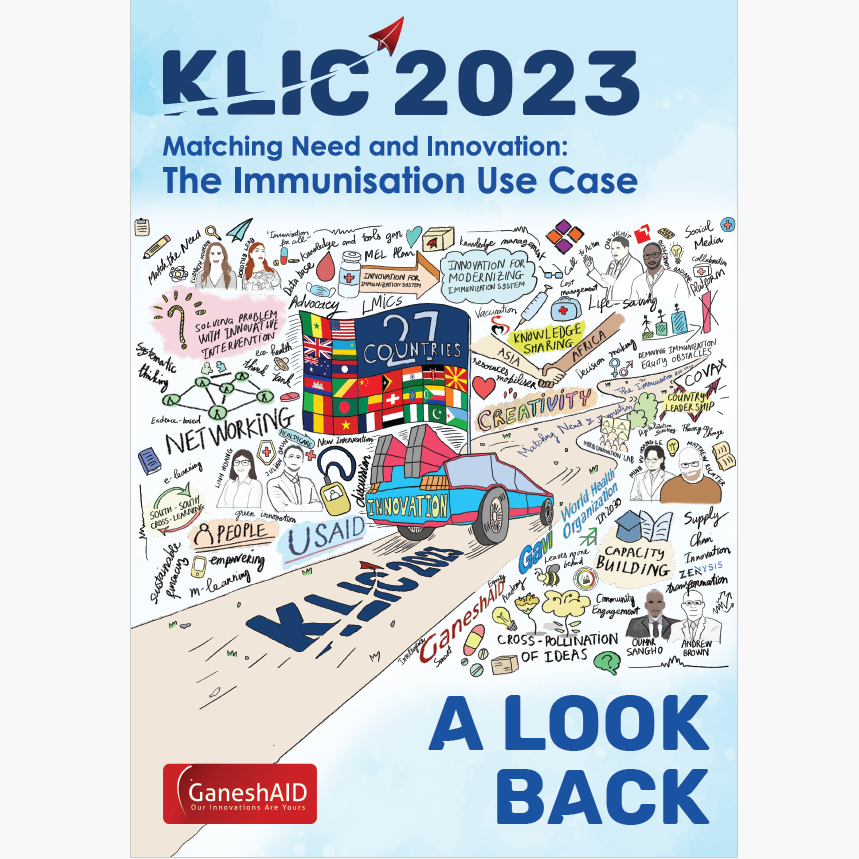
KLIC2023: Matching Need and Innovation – The Immunisation Use Case
KLIC2023 Key Findings

SHARED OBSTACLES
Knowledge sharing revealed the same obstacles faced by African and Asian countries.

ISOLATED INNOVATIONS
South-South cross-learning revealed that many helpful innovations remain unknown due to a lack of information or evidence.

INSUFFICIENT CAPACITIES
Governments’ capacities to drive the innovation agenda require strengthening.

READINESS
Countries are willing to innovate and modernize immunisation programs.
FRAGMENTED INNOVATION INFORMATION
There is an urgent need to invest in innovation intelligence to optimize innovation processes.

INNOVATION STRATEGIES
Innovation has to become an integral part of policymaking and service delivery for systematic adaptation in times of change.
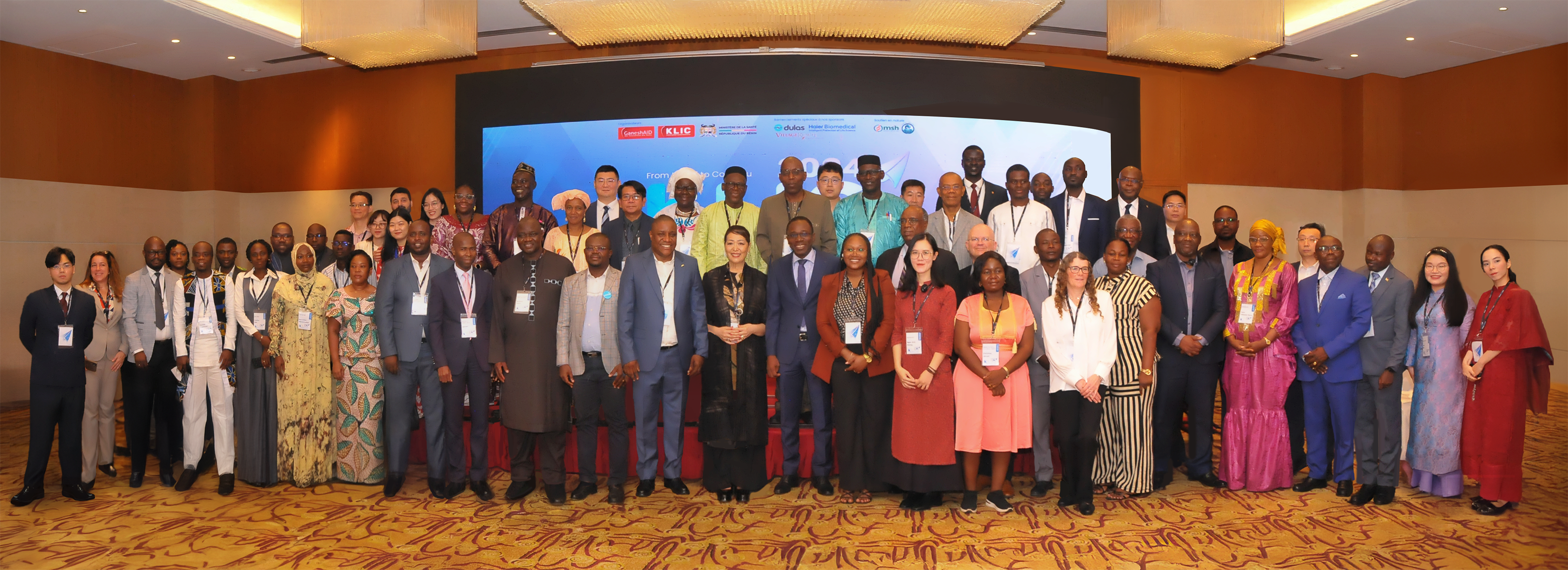
Why Countries Need to Leverage Vaccination Innovations
to Modernize Primary Health Care (PHC)?
Continuum of Integration to Reach All Communities
Integrated health systems are recognized as major contributors to better distribution of health outcomes and improved well-being. In emergency conditions, integrated health services can ensure better access to the target population. In recent years, several crises, including conflicts, natural disasters, epidemics and pandemics, have led to a major change in the health-seeking behavior of communities, with preventive services being relegated to the background despite their availability and curative health services being sought as late as possible.
IA2030: Global Convergence of Immunization Integration in PHC
Routine immunization has long been integrated into many programmes, such as Vitamin A supplementation, growth monitoring, deworming or insecticide-treated mosquito nets. The importance of integration, both in health systems in general and in immunization programmes in particular, has been steadily growing, and this is reflected in a wide range of global policies and strategies.
The Immunization Agenda 2030 (IA2030) sets out a global vision and strategy for vaccines and immunization for the decade 2021-2030. For immunization programme to be effective in strengthening PHC through FY2030, domestic financing and official development assistance (ODA) must be aligned across development partners, as well as aligned with national targets. GaneshAID and its partners are supporting countries to expand immunization services to reach under-immunized and zero-dose children on a regular basis, while expanding full immunization through routine services and helping to strengthen a stronger PHC platform through immunization scale-up efforts.
Globally, many efforts have been made to synchronize immunization services with other country-specific areas or areas of concern in many countries, such as the application of the primary health care lens to Gavi programmes, the United States Agency for International Development’s (USAID) Maternal and Child Survival Programme (MCSP) which has helped Liberia’s Ministry of Health to scale up integrated family planning and immunization services as part of a broader programme of service delivery and health system recovery after the Ebola outbreak.
Immunization as an entry point to primary health care
A significant decline in immunization coverage and an overburdened public health system pose a risk of outbreaks of vaccine-preventable diseases (VPDs) and urgent intervention is needed to address the immune gap. Today, the vaccination platform as an entry point to reach communities through differentiated/targeted service delivery, identification and reach of zero-dose communities, demand generation, community engagement, and other services can be replicated for other programmes, including but not limited to those for maternal and child health, reproductive health, and family planning, nutrition, early childhood development, COVID-19, children with disabilities, social protection, education, health emergencies like cholera, etc., and these can support each other.
Innovations to Increase the Reach and Impact of PHC
Current knowledge, tools, and practices alone will not be enough to achieve equitable coverage targets, and this is why the IA2030 strategic priorities focus on improving global and national research and innovation capacities to increase equitable vaccination coverage, extend the benefits of vaccination to other populations, identify and respond to unmet needs and emerging challenges.
The IA2030 strategic priorities highlight specific research and innovation needs for immunization programmes but also the PHC platform, in the context of the integration continuum. Thus, GaneshAID and its partners wish, through the KLIC initiative, to participate in the response to these research and innovation needs.
KLIC2024: Leveraging Immunisation Innovations to Modernise Primary Health Care

Organize knowledge on approaches to integrating immunization-based innovations into the PHC platform and health systems, and vice versa.

Promote research and intelligence systems
to prioritize relevant and sustainable innovations.
KLIC2024 Objectives

Document innovative strategies to mitigate vaccine misinformation.

Map pioneering solutions to reach underserved populations in rural, conflict, peri-urban, and special populations areas.

Share revolutionary approaches to fighting epidemics and supporting humanitarian aid.

Improve the innovation ecosystem at the country level.
KLIC2024 Key Findings


Thematic Menu of KLIC2024
Abstract submissions are open until September 27th, 2024. Following a selection process, successful authors will be notified by October 11th, 2024 and will present their materials by November 1st, 2024 to the Technical Committee.
You are welcome to submit your abstract HERE!
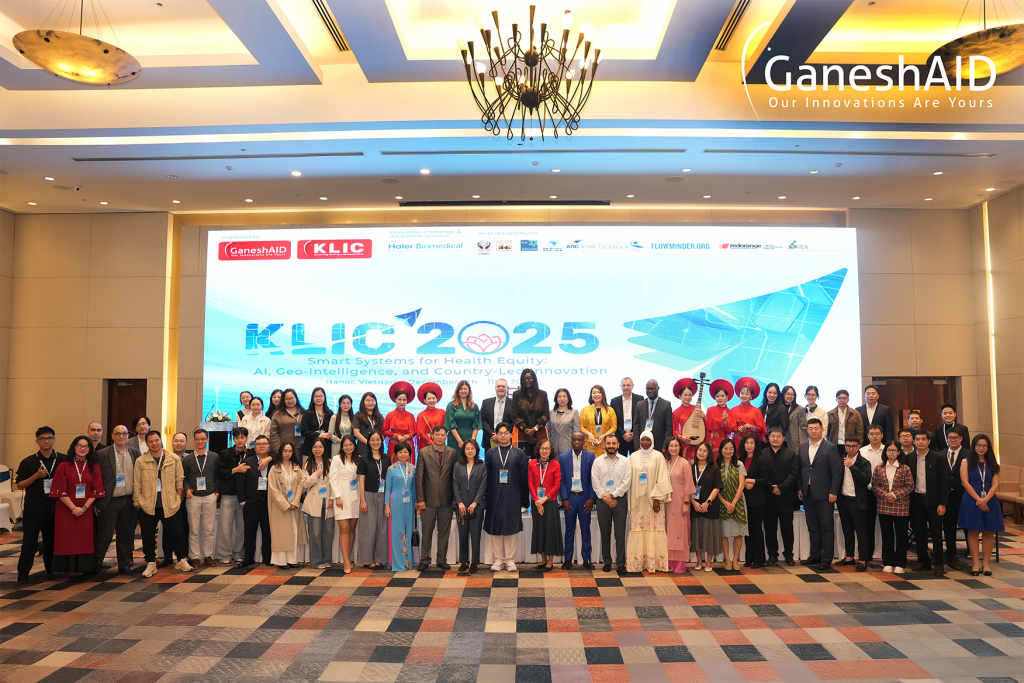


Why Countries Need Smart Systems to Advance Health Equity?
The Next Frontier: Intelligence for Health Equity
Countries are increasingly facing complex health challenges marked by inequality in access and outcomes. Traditional systems are not agile enough to anticipate and respond to evolving needs, especially in fragile and resource-constrained contexts. Smart systems powered by artificial intelligence, geo-intelligence, and digital platforms offer countries novel abilities to generate predictive insights, optimize resource allocation, and ensure no community is left behind.
Global Momentum for Digital Transformation in Health
Recognizing digital transformation as an inevitable driver in these days and ages, the global health community has been actively advocating more equitable and modern systems. The WHO Global Strategy on Digital Health and the Immunization Agenda 2030 (IA2030) call for leveraging data and technology to improve health equity and system resilience. For immunization in particular, smart digital innovations enable countries to strengthen microplanning, track zero-dose children, and improve accountability in service delivery — aligning with global health’s vision of reaching everyone, everywhere, at every age.
Country-Led Innovation: Ownership and Sustainability
While global frameworks and partners provide direction, lasting change requires country-led solutions that respond to local realities. Ministries of Health, frontline workers, and communities are best placed to define and adapt digital innovations that work in their contexts. By supporting South-South learning, peer exchange, and co-creation labs, KLIC2025 ensures that intelligence-driven innovations are not externally imposed, but rather incubated and scaled by those who will sustain them.
From Innovation to Impact: Scaling What Works
Pilot projects and isolated innovations will not suffice to meet the equity challenge. Countries need platforms and ecosystems that can take proven smart solutions to scale, with robust governance, ethical safeguards, and financing models. KLIC2025 will provide a space to showcase, test, and scale smart systems — from AI for predictive supply chains to geo-intelligence for last-mile delivery — ensuring that innovations move beyond experimentation to measurable, population-level impact.
Equity, Trust, and the Human Dimension
Smart systems are not just about technology. They must be designed with equity, ethics, and inclusion at the core, ensuring that marginalized populations benefit, community voices are integrated, and data use builds trust rather than exclusion. By bringing together governments, innovators, civil society, youth, and gender advocates, KLIC2025 reaffirms that health equity is both a technological and a human challenge.
KLIC2025 Objectives

Accelerate adoption of smart systems such as AI, geo-intelligence, and open digital platforms in health.

Facilitate country-led dialogue and experience-sharing on digital transformation for immunization equity.

Support South-South learning and cross-sector collaboration between governments, innovators, and communities.

Showcase and incubate innovations through storytelling, labs, and hackathon prototypes.
Innovation e-Agora is a series of initiatives within the KLIC framework, a community of motivated pioneers with innovative ideas for improving health equity. KLIC provides up-to-date insights on Global health innovations and facilitates capacity building to introduce, test, refine, and scale-up innovations that address persistent obstacles to Health equity in low- and middle-income countries.
An insightful session where passionate members of the KLIC community including global health experts and innovators gathered to delve into the key outcomes and findings of the Innovation Lab event, KLIC2024, under the theme “Leveraging Immunisation Innovations to Modernise Primary Health Care”, and discussed exciting ideas for the path ahead as the community of pioneers in global health innovations.
KLIC Innovation e-Agora #1 is about KLIC2024 brought together global and country leaders to share insights, showcase innovations, and shape future directions for advancing health equity. The event highlighted practical solutions, collaborative learning, and concrete pathways to accelerate the adoption and use of public health innovations worldwide.
The next chapter in our series: Innovation e-Agora #2! This eagerly anticipated event promises to bring together the brightest minds in global health innovation for another dynamic and engaging session.
In this insightful session, we will spotlight the following key topics:
- Problems of equitable distribution of vaccines and supplies, especially in hard-to-reach areas: Application of drones
- Insufficient demand for vaccination benefits: Virtual assistants to improve public awareness and education.
- Zero-dose and under-immunized children: Targeting vaccination strategies to reduce EZDs, ESVs, and missed communities in conflict zones.
KLIC Innovation e-Agora #2 explored how global health innovations can reach populations living in conflict zones and hard-to-reach settings. The session showcased practical country experiences, digital and logistical innovations, and collaborative approaches to strengthen health systems, improve vaccination coverage, and advance health equity.
After the success of Innovation e-Agora #2, we are thrilled to announce the next edition of our series: Innovation e-Agora #3! This highly anticipated event will once again unite the top thinkers in global health innovation for another inspiring and interactive session.
This session will highlight the following topics:
- AI-powered tools for Immunization workforce Series #2: Zoom on Chatbots and Virtual Assistants
- Waste management and Zero Pollution Incinerators.
- Performance coaching and digital supportive supervision
KLIC Innovation e-Agora #3 focused on translating sustainability into action through innovative approaches to waste management, performance coaching, and the use of AI in health systems. The session highlighted practical solutions and country experiences that demonstrate how innovation, digital tools, and capacity building can improve system performance while reducing environmental and operational challenges.
We are beyond excited to announce the return of our Virtual KLIC Innovation Agora series – vKIA #4: Leading, Piloting, and Learning in Challenging Environments! As always, this event promises to bring together the brightest minds in global health to engage in an interactive and inspiring discussion. We explore innovative approaches to piloting health and immunization programs.
We will delve into the following key topics:
- Innovative Intelligence System for Action
- Cambodia Leading Immunization Supply Chain Transformation
KLIC Innovation e-Agora #4 focused on how leaders can effectively lead, pilot innovations, and learn in complex and challenging environments. The session highlighted data-driven decision-making, leadership capacity building, and the use of digital and AI-powered tools to strengthen health systems, transform immunization supply chains, and turn persistent challenges into actionable solutions.
It is with great pleasure that we announce the upcoming edition of our Virtual KLIC Innovation Agora series – vKIA #5: Advancing Public Health Through Workforce Innovation. We warmly invite you to join us for this engaging and inspiring event, which continues our tradition of bringing together leading minds in global health for thoughtful, interactive dialogue.
We will delve into the following key topics:
- How innovation addresses critical healthcare challenges by fostering creativity and technology integration
- Key strategies to empower frontline workers and communities
- Leveraging technology to improve performance efficiency
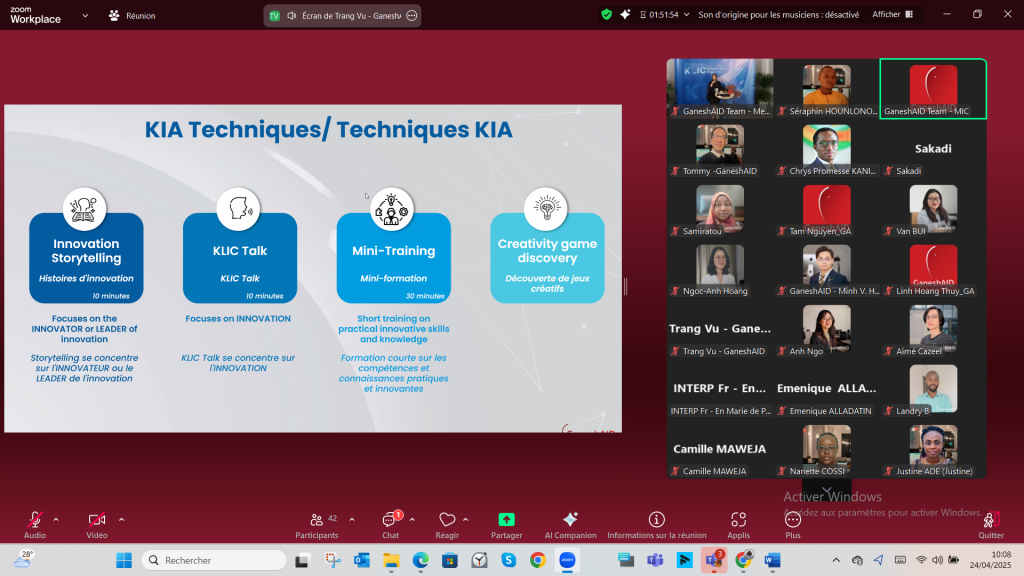
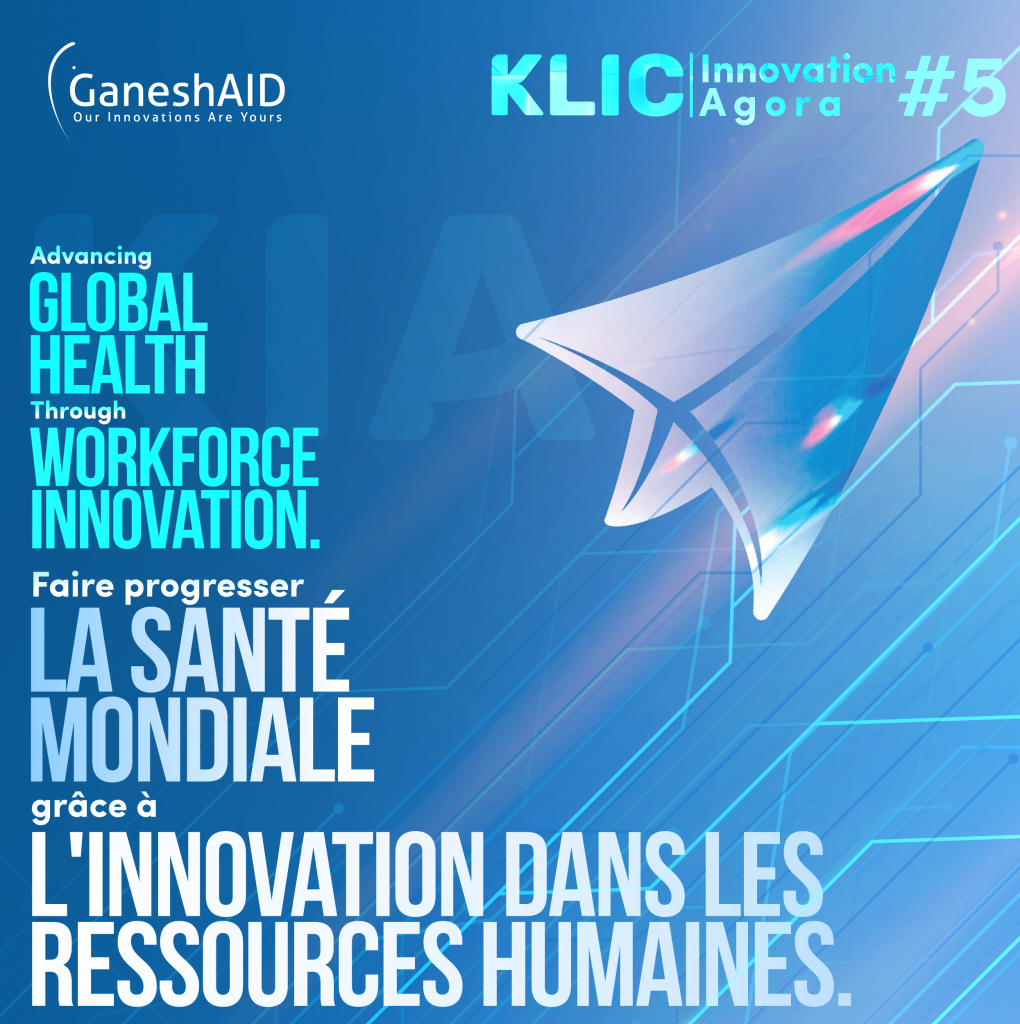
KLIC Innovation e-Agora #5 highlighted how workforce innovation can accelerate global health impact, particularly in resource-limited settings. The session showcased practical approaches such as microlearning, digital coaching, and community-centred platforms to strengthen health worker performance, expand immunization coverage, and deliver sustainable, high-return investments in health systems.
On behalf of GaneshAID, we extend our heartfelt thanks for your participation in the event “KLIC Innovation e-Agora 06: Rethinking Health Service Delivery: Smart, Sustainable, and People-Centered.” Your engagement played a vital role in the success of the event, and we deeply appreciate the opportunity to exchange insights and learn together.
This webinar will explore critical topics related to public health advancement through workforce innovation, including:
- Telehealth & Hybrid Clinics
- Smart & Sustainable Health Centers
- Differentiated Care Models (DSD
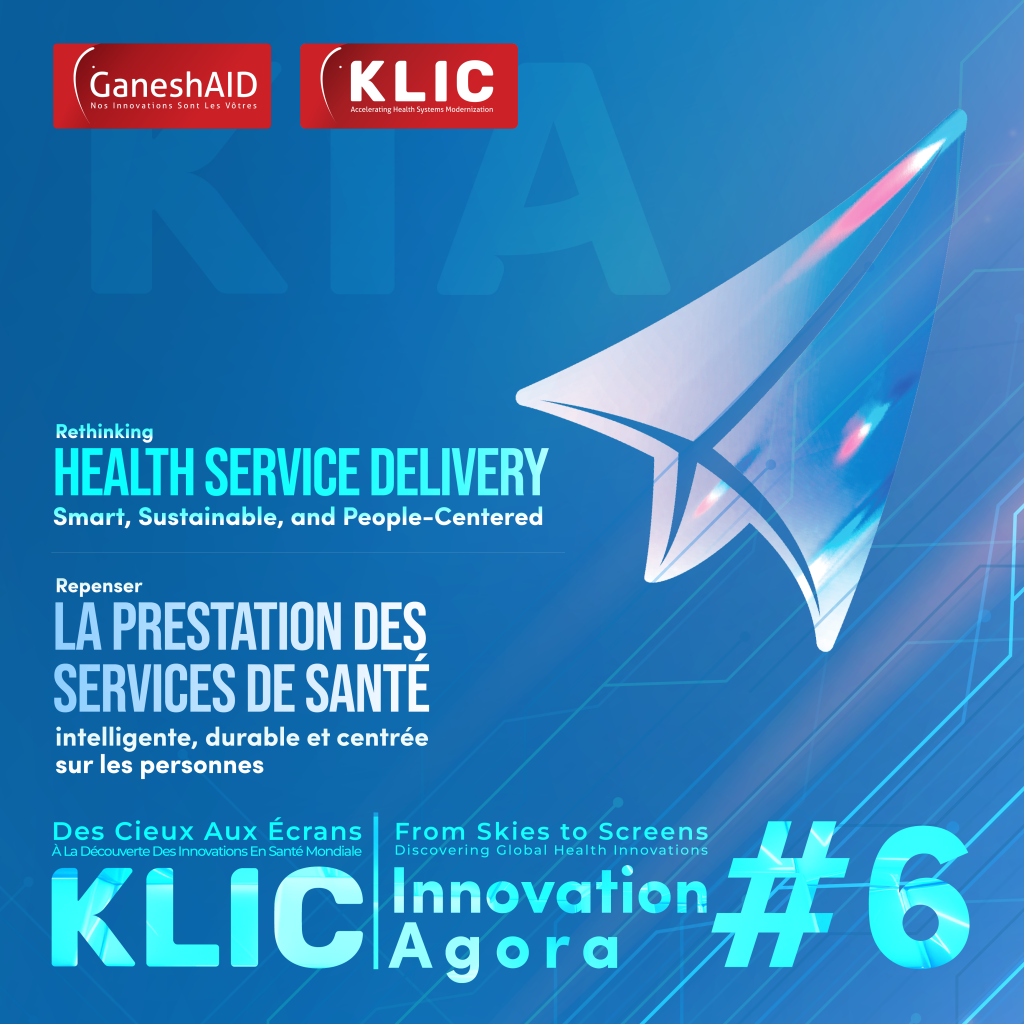
KLIC Innovation e-Agora #6 examined how health service delivery in low- and middle-income countries can be reimagined to become smarter, more sustainable, and people-centred. The session highlighted global trends and local innovations -such as smart health centers, telemedicine, hybrid clinics, and differentiated service delivery – that demonstrate how digital solutions and human-centred design can strengthen health systems, improve equity, and deliver care closer to communities.
We would like to extend our sincere thanks for your participation in the event “KLIC Innovation e-Agora 07: Intelligence System for Equity – How can we maximize data and AI to reach Zero Dose Children.” Together, we exchanged valuable insights, and your active engagement was a key contributor to the event’s success. We truly appreciate the opportunity to learn and collaborate with you.
This webinar will explore crucial topics including:
- How can we ensure actions to be taken?
- Why is it important to have local data systems?
- Application of artificial intelligence and predictive modelling for health system preparedness
- Local data ecosystems for frontline actions
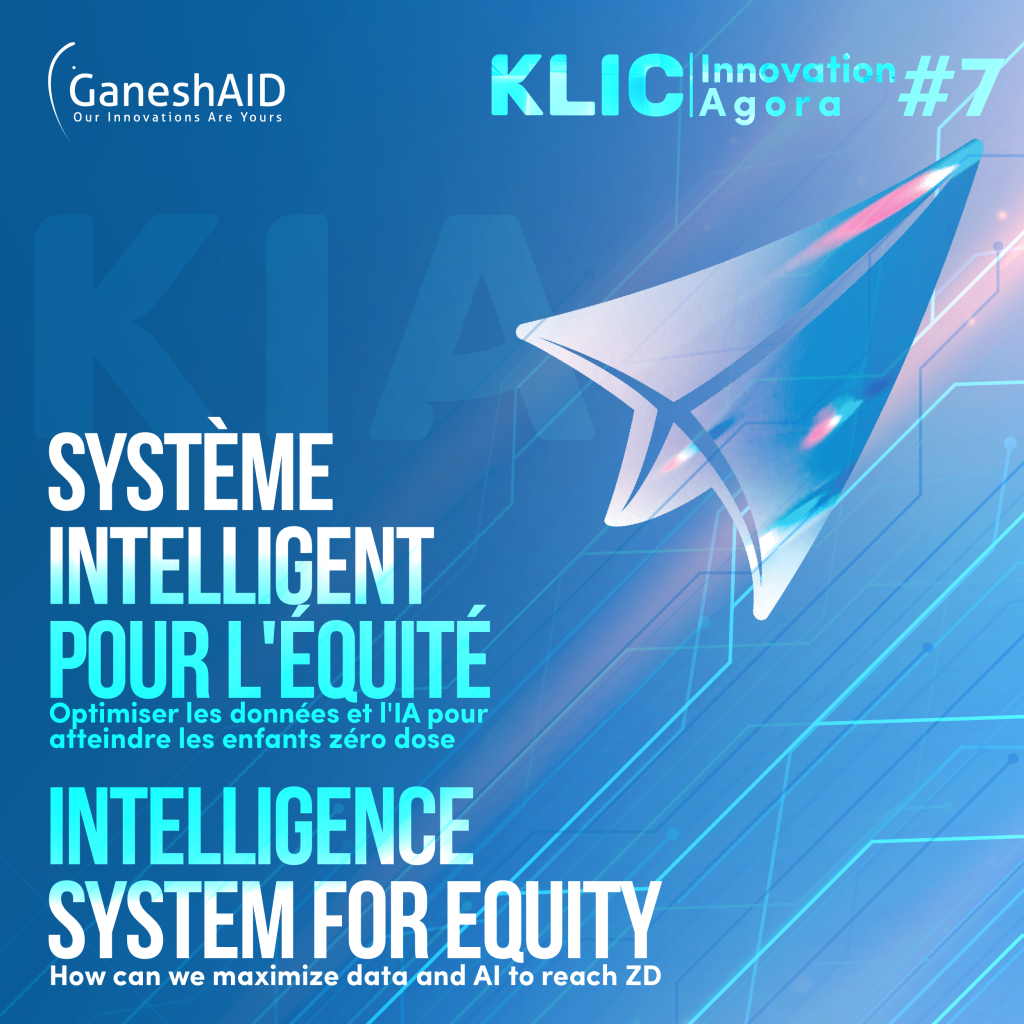
KLIC Innovation e-Agora #7 focused on how data and artificial intelligence can be leveraged to reach zero-dose children and advance immunization equity. The session highlighted the need for nationally owned, ethically grounded intelligence systems, open platforms, and predictive modeling to transform fragmented data into actionable insights, strengthen accountability, and support more equitable public health decision-making.
We are pleased to introduce our upcoming Virtual KLIC Innovation Agora series – vKIA #08: Digital Micro-Planning for Health Equity and Coverage. This event promises to bring together the brightest minds in global health innovation for another dynamic and engaging session.
Join us as we explore:
- What is digital micro-planning, and how does it differ from traditional approaches in immunization and primary health care?
- Why is micro-planning a critical enabler for reaching zero-dose and under-immunized children?
- What lessons can be learned from countries that have successfully adopted digital micro-planning?

KLIC Innovation e-Agora #8 explored how digital micro-planning can drive more equitable and effective health service delivery, particularly for reaching zero-dose and underserved populations. The session highlighted country experiences and innovative tools – such as geospatial mapping, predictive analytics, and integrated digital platforms – that enable frontline teams to move from static plans to data-driven, precise, and locally owned action.
We’re excited to announce the session in the KLIC Innovation Agora Virtual Series – vKIA #09: Climate-Smart Vaccine Distribution: Resilient Systems in the Face of an Unpredictable Climate.
This session will gather leading voices and innovators in global health to share insights, spark ideas, and inspire action toward more resilient vaccine delivery systems. We explore how innovation and human-centered approaches can strengthen public health in the face of climate challenges.
Together, we’ll dive into key questions such as:
- How is climate change disrupting vaccine distribution in vulnerable and low-resource settings?
- What role can digital tools play in anticipating and responding to climate-related logistical challenges?
- What are the most promising technological innovations to keep vaccines potent during heat waves, floods or power cuts?
- How can governments and their partners integrate climate resilience into routine immunization planning and financing?
KLIC Innovation e-Agora #9 examined how climate change is increasingly disrupting immunization systems and placing zero-dose children at greatest risk. The session highlighted country experiences and climate-smart innovations – such as resilient cold chain solutions, digital foresight, and adaptive service delivery models – that demonstrate how integrating climate considerations into planning and systems design is essential to protect first-dose delivery and advance health equity.
It is with great pleasure that we announce the upcoming edition of our Virtual KLIC Innovation Agora series – vKIA #10: “From Training to Transformation: Embedding Capacity-Building Systems into the Workplace” We warmly invite you to join us for this engaging and inspiring event, which continues our tradition of bringing together leading minds in global health for thoughtful, interactive dialogue.
We will delve into the following key topics:
- How can we shift from one-off training to continuous, workplace-based learning that strengthens performance?
- What effective models or tools help embed learning into daily health work, especially in low-resource settings?
- How can data, technology, and supervision transform workplaces into learning environments?
- What policies and partnerships are needed to institutionalize capacity-building within national health systems?
KLIC Innovation e-Agora #10 focused on moving from training to transformation by embedding learning and performance coaching directly into the workplace. The session highlighted how continuous learning, supportive coaching systems, and human-centred digital tools can strengthen health workforce performance and drive sustainable system change.
We are pleased to announce our upcoming event, Virtual KLIC Innovation Agora (vKIA) #11, themed “Funding for Innovation: Mobilizing Resources for Health Equity” We warmly invite you to join this inspiring session, where leading voices in global health will come together for open and engaging discussions. We will delve into the following key topics:
- What strategies can innovators use to demonstrate value-for-money and impact to attract sustained investment?
- How can countries and partners design sustainable financing mechanisms to move innovation from pilot projects to national scale-ups?
- What role can innovative financing instruments – such as catalytic funds, blended finance, or public-private partnerships – play in supporting health innovation ecosystems?
- How can countries institutionalize innovation financing within their governance, planning, and accountability frameworks?
- How can development partners and private investors better align their funding to accelerate local innovation and ensure equitable access?
KLIC Innovation e-Agora #11 focused on how governments can lead the financing of health innovation to advance health justice in an era of donor transition. The session brought together country voices from Asia and Africa, legal and financing experts, and global partners to explore realistic financing diversification mechanisms, protect vulnerable populations, and ensure continuity of immunization and primary health care services through justice-centred, country-owned approaches.
Join Us Now!
Become a part of this dynamic community that values knowledge creation and sharing to solve the most pressing health challenges of our time. Engage with KLIC to learn more about our work and how you can contribute to the health system modernization in LMICs.
Email: infoklic@gmail.com
Address: Coastal department – Commune of Cotonou, 5th District, Ward SCOA Gbeto-Carre 124 – Parcelle
Phone: (+229) 97 11 99 46

We are here!