
ABOUT US
GaneshAID is a women-led humanist consultancy dedicated to saving more lives in low- and middle-income countries.
Our organization specializes in improving global health while respecting ethical and humanistic principles.
We are proud to support organizations and governments in developing practical, innovative approaches to solve persistent problems of inequity and low health coverage. Together with its partners, GaneshAID provides knowledge on trends in innovations and provides new ideas that support the strategic agenda of organizations, governments, and communities.
We pay particular attention to the needs of vulnerable populations, while ensuring that the proposed solutions are not only focused on economic efficiency or technical management, but also integrate values such as human dignity, equitable access to care, and community participation.
For more information, please visit:
Our website: https://ganeshaid.com/en/
Our LinkedIn page: https://www.linkedin.com/company/ganeshaid/
About the Project
This multi-post technical assistance assignment will support the introduction and scale-up of Near Point-of-Care TB diagnostics. The project focuses on strengthening key areas required for successful diagnostic implementation, including laboratory systems, supply chain forecasting, regulatory readiness, implementation planning, training, MEAL, and community demand generation. It aims to help national programmes adopt decentralised TB testing approaches that improve access, reduce diagnostic delays, and align with global guidance and national health strategies.
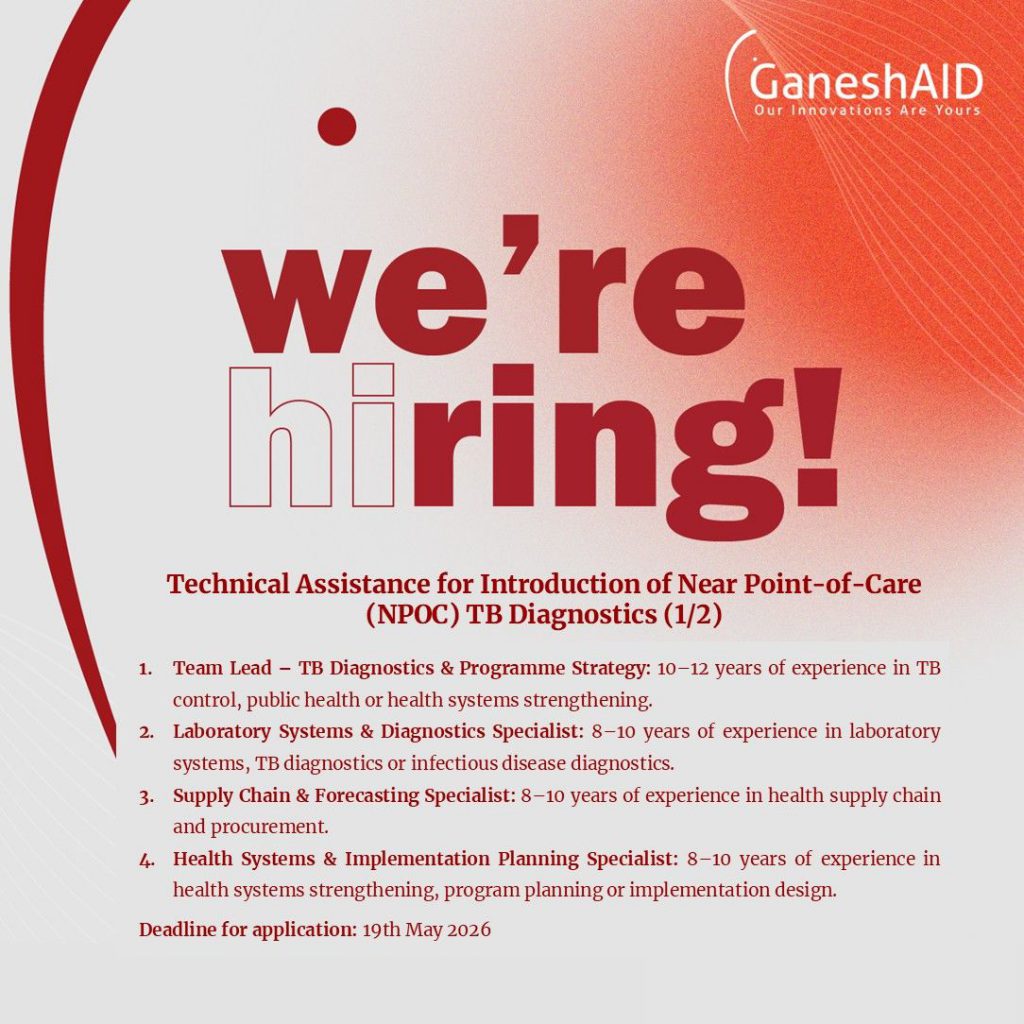
Position: Team Lead – TB Diagnostics & Programme Strategy
Role Summary
Provide overall technical leadership and strategic direction for the delivery of technical assistance to Ministries of Health and National TB Programmes for the introduction and scale-up of Near Point-of-Care (NPOC) TB diagnostics. The Team Lead will ensure alignment with WHO guidance, Global Fund priorities, and national health strategies, while overseeing quality and coherence across all technical workstreams.
Key Responsibilities
- Lead reporting to the Global Fund, including progress updates and final deliverables
- Lead inception phase, including country prioritisation, stakeholder mapping, and scoping of technical assistance
- Provide overall technical oversight across all workstreams, including:
- Policy and guideline updates
- Diagnostic algorithm optimisation
- Costed implementation planning
- Ensure alignment with WHO recommendations and Global Fund strategic priorities
- Lead engagement with Ministries of Health, National TB and Laboratory Programmes, and partners
- Coordinate multidisciplinary expert team and ensure integrated delivery across technical areas
- Oversee quality assurance of all deliverables, including reports, plans, and tools
- Provide strategic guidance on scale-up, sustainability, and integration into national systems
Qualifications
Education
- Advanced degree (MD, PhD, or equivalent) in Public Health, Medicine, Epidemiology, or related field
Professional Experience
- Minimum 10–12 years of experience in TB control, public health, or health systems strengthening
- Demonstrated experience supporting national TB programmes and diagnostic strategy development
- Experience working with Global Fund, WHO, or similar international partners
- Proven leadership of multi-country or multi-stakeholder technical assistance assignments
Skills and Competencies
- Strong strategic and technical leadership capability
- Ability to translate global guidance into national implementation
- Excellent stakeholder engagement and coordination skills
- Strong analytical, writing, and quality assurance capacity
Language Requirements
- Fluency in English required
- French, Spanish, or Portuguese highly desirable depending on region
Location and Availability
- Multi-country (global), with remote delivery and limited travel
- Duration: June–December 2026
- Availability: Intermittent but sustained engagement across assignment lifecycle
Position: Laboratory Systems & Diagnostics Specialist
Role Summary
Lead the technical design and operational integration of Near Point-of-Care (NPOC) TB diagnostics within national laboratory networks and service delivery systems. The specialist will ensure that NPOC deployment is aligned with WHO guidance, technically sound, and feasible within decentralised and resource-constrained settings, with clear linkages to drug susceptibility testing (DST) and treatment pathways.
Key Responsibilities
- Assess national diagnostic networks and laboratory system readiness for NPOC integration
- Support integration of NPOC diagnostics into national diagnostic algorithms and testing strategies
- Define appropriate use cases for NPOC deployment across different levels of the health system
- Provide technical input into diagnostic network optimisation and decentralisation approaches
- Support development of SOPs, Job aids, Quality assurance mechanisms for NPOC diagnostics
- Ensure alignment with national laboratory standards and quality management systems
- Contribute to training materials and capacity building approaches for healthcare and laboratory staff
- Provide inputs into implementation planning, including site selection, workflow design, operational requirements
- Collaborate with supply chain, M&E, and health systems experts to ensure integrated delivery
- Contribute to technical reports, plans, and other key deliverables
Qualifications
Education
- Advanced degree in Laboratory Sciences, Microbiology, Biotechnology, or related field
Professional Experience
- Minimum 8–10 years of experience in laboratory systems, TB diagnostics, or infectious disease diagnostics
- Experience with molecular diagnostics and decentralised testing approaches
- Demonstrated experience supporting national laboratory systems or TB diagnostic programmes
- Familiarity with WHO TB diagnostic guidelines and frameworks
- Experience working with Ministries of Health or National TB/Laboratory Programmes
Skills and Competencies
- Strong technical expertise in TB diagnostics and laboratory systems
- Ability to translate diagnostic requirements into operational models
- Understanding of decentralised service delivery and referral systems
- Strong collaboration and problem-solving skills
- Ability to contribute to high-quality technical outputs
Language Requirements
- Fluency in English required
- Additional regional languages are an asset
Location and Availability
- Multi-country (global), with remote delivery and limited travel
- Duration: June–December 2026
- Availability: Intermittent engagement aligned with technical inputs
Position: Supply Chain & Forecasting Specialist
Role Summary
Lead demand forecasting, quantification, and supply chain planning for Near Point-of-Care (NPOC) TB diagnostics to ensure reliable availability and alignment with national procurement and distribution systems. The specialist will support integration of NPOC commodities into existing supply chains and Global Fund-supported procurement mechanisms.
Key Responsibilities
- Develop demand forecasts for NPOC diagnostics based on epidemiological data and programme targets
- Support quantification and integration into national procurement and supply planning systems
- Advise on:
- Buffer stock levels
- Lead times
- Distribution strategies
- Ensure alignment with national supply chain systems and Global Fund PSM processes
- Identify supply chain risks and propose mitigation measures
- Support integration of NPOC diagnostics into existing logistics and distribution networks
- Collaborate with laboratory and health systems experts to align supply planning with service delivery models
- Contribute to costed implementation plans and forecasting documentation
- Provide inputs to technical reports and deliverables
Qualifications
Education
- Degree in Supply Chain Management, Public Health, Pharmacy, or related field
Professional Experience
- Minimum 8–10 years of experience in health supply chain and procurement
- Experience with diagnostics or medical commodities supply chains
- Demonstrated experience in forecasting and quantification
- Experience working with Global Fund PSM systems or similar donor-funded procurement mechanisms preferred
- Experience supporting national supply chain systems in LMICs
Skills and Competencies
- Strong analytical and forecasting skills
- Understanding of procurement and supply chain systems in resource-constrained settings
- Ability to align supply planning with programme implementation needs
- Strong coordination and problem-solving skills
- Ability to contribute to high-quality technical outputs
Language Requirements
- Fluency in English required
- Additional regional languages are an asset
Location and Availability
- Multi-country (global), with remote delivery and limited travel
- Duration: June–December 2026
- Availability: Intermittent engagement aligned with forecasting and planning cycles
Position: Health Systems & Implementation Planning Specialist
Role Summary
Lead the development of operational and costed implementation approaches for the introduction and scale-up of Near Point-of-Care (NPOC) TB diagnostics. The specialist will ensure that technical strategies are translated into feasible, resource-aligned, and country-owned plans integrated within national health systems and funding frameworks.
Key Responsibilities
- Lead development of national implementation plans for NPOC diagnostics, aligned with country context and priorities
- Define rollout strategies, including:
- Phasing and geographic prioritisation
- Service delivery models
- Integration into existing TB and primary healthcare systems
- Develop costed plans covering key components such as:
- Training
- Supply chain
- Quality assurance
- Monitoring and supervision
- Ensure alignment with:
- National strategic plans
- Available funding (including Global Fund grants)
- Health system capacity and constraints
- Support scenario analysis and prioritisation to guide decision-making
- Integrate inputs from laboratory, supply chain, and other technical workstreams into a coherent plan
- Contribute to development of planning tools, templates, and guidance for country use
- Support validation of plans with national stakeholders
- Contribute to technical reports and deliverables
Qualifications
Education
- Advanced degree in Public Health, Health Systems, Health Economics, or related field
Professional Experience
- Minimum 8–10 years of experience in health systems strengthening, programme planning, or implementation design
- Demonstrated experience developing national or sub-national implementation or operational plans
- Experience with costing of health programmes or interventions
- Familiarity with donor-funded programmes, including Global Fund processes, preferred
- Experience working with Ministries of Health and national programmes in LMICs
Skills and Competencies
- Strong health systems thinking and implementation planning capability
- Ability to translate technical strategies into operational and costed plans
- Strong analytical and structuring skills
- Ability to integrate multi-sector inputs into coherent frameworks
- Strong stakeholder engagement and facilitation skills
- Ability to produce clear, high-quality planning documents
Language Requirements
- Fluency in English required
- Additional regional languages are an asset
Location and Availability
- Multi-country (global), with remote delivery and limited travel
- Duration: June–December 2026
- Availability: Intermittent engagement with peak input during planning and validation phases
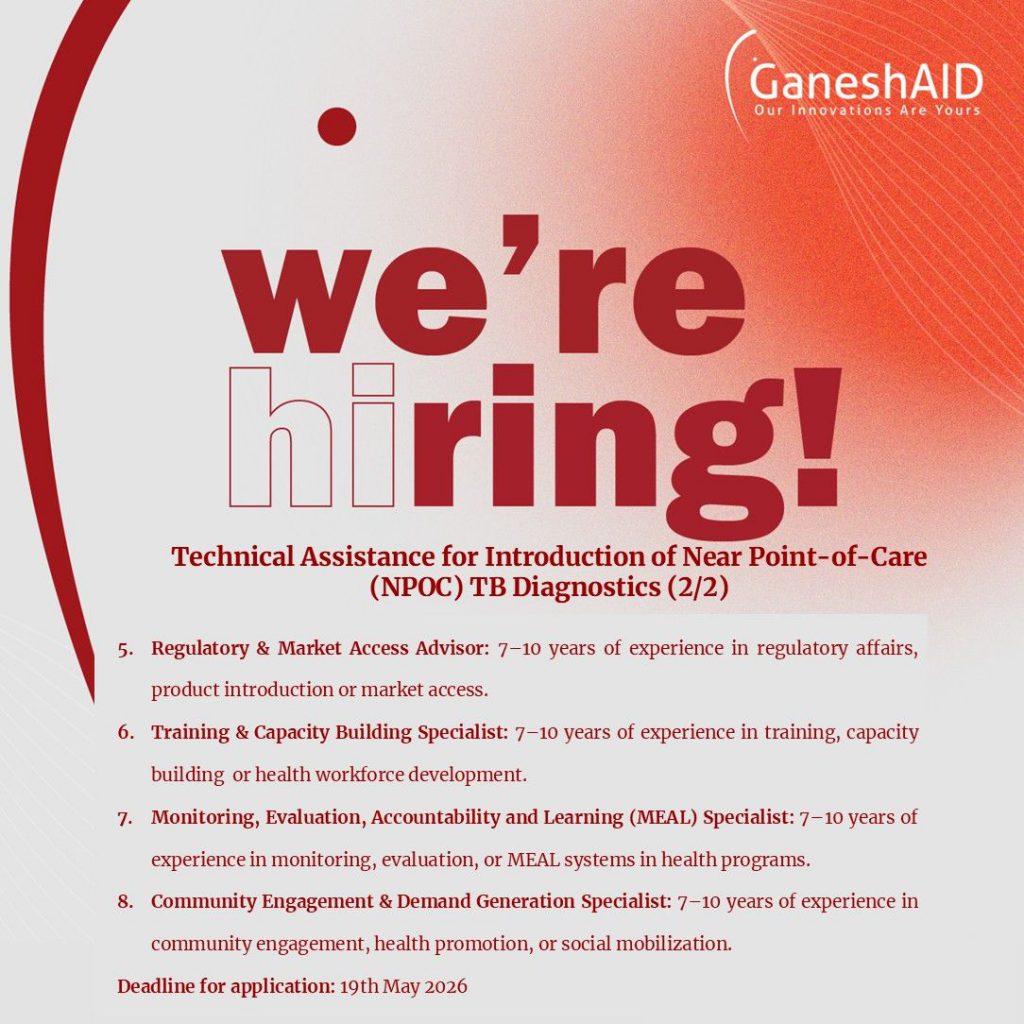
Position: Regulatory & Market Access Advisor
Role Summary
Provide technical guidance on regulatory pathways and product introduction processes to support timely adoption of Near Point-of-Care (NPOC) TB diagnostics. The advisor will work with national authorities and partners to facilitate efficient registration, compliance, and market readiness.
Key Responsibilities
- Advise on national regulatory requirements and approval pathways for NPOC diagnostics
- Support preparation and review of regulatory documentation and submission processes
- Engage with national regulatory authorities to facilitate product registration
- Coordinate with manufacturers and partners to ensure compliance with local requirements
- Identify regulatory bottlenecks and propose practical solutions to accelerate approval timelines
- Provide input into national implementation plans on regulatory readiness and timelines
- Support alignment with WHO prequalification and other international standards where relevant
- Contribute to technical reports and deliverables
Qualifications
Education
- Degree in Pharmacy, Regulatory Affairs, Public Health, or related field
Professional Experience
- Minimum 7–10 years of experience in regulatory affairs, product introduction, or market access
- Experience with diagnostics or medical products registration in LMICs
- Familiarity with national regulatory systems and approval processes
- Experience working with Ministries of Health, regulatory authorities, or international partners
Skills and Competencies
- Strong understanding of regulatory pathways and product approval processes
- Ability to navigate complex regulatory environments
- Strong stakeholder engagement and coordination skills
- Practical problem-solving approach to accelerate product introduction
- Ability to contribute to clear, actionable technical outputs
Language Requirements
- Fluency in English required
- Additional regional languages are an asset
Location and Availability
- Multi-country (global), primarily remote with limited travel if required
- Duration: June–December 2026
- Availability: Part-time / on-demand engagement aligned with country needs
Position: Training & Capacity Building Specialist
Role Summary
Lead the development and adaptation of training materials and capacity building approaches to support effective rollout of Near Point-of-Care (NPOC) TB diagnostics. The specialist will ensure that training is practical, context-appropriate, and aligned with national systems and workforce needs.
Key Responsibilities
- Develop and adapt training materials for healthcare workers and laboratory staff
- Design training approaches, including:
- Training-of-trainers models
- On-the-job training and mentoring approaches
- Develop SOPs, job aids, and practical guidance tools
- Define competency requirements for different cadres involved in NPOC testing
- Ensure alignment with national training systems and guidelines
- Support integration of training into implementation plans
- Contribute to training delivery and validation where required
- Provide inputs to technical reports and deliverables
Qualifications
Education
- Degree in Public Health, Health Education, Laboratory Sciences, or related field
Professional Experience
- Minimum 7–10 years of experience in training, capacity building, or health workforce development
- Experience developing training materials for health programmes
- Experience working in TB, diagnostics, or infectious disease programmes preferred
- Experience working with Ministries of Health or national programmes
Skills and Competencies
- Strong curriculum and training material development skills
- Understanding of adult learning and capacity building approaches
- Ability to translate technical content into practical tools
- Strong facilitation and communication skills
Language Requirements
- Fluency in English required
- Additional regional languages are an asset
Location and Availability
- Multi-country (global), with remote delivery and limited travel
- Duration: June–December 2026
- Availability: Intermittent engagement aligned with training development and rollout
Position: Monitoring, Evaluation, Accountability and Learning (MEAL) Specialist
Role Summary
Lead the adaptation and integration of monitoring, evaluation, accountability, and learning (MEAL) frameworks to support effective tracking, quality assurance, and continuous improvement of Near Point-of-Care (NPOC) TB diagnostics implementation within national health systems. The specialist will ensure that data systems are practical, aligned with national and Global Fund requirements, and used to inform decision-making and programme adaptation.
Key Responsibilities
- Adapt MEAL frameworks and indicators for NPOC TB diagnostics implementation
- Support integration of NPOC indicators into national health information systems
- Define key indicators related to:
- Uptake
- Quality
- Diagnostic performance
- Develop data collection, reporting, and accountability tools
- Ensure alignment with:
- National M&E systems
- Global Fund performance and reporting requirements
- Support use of data for:
- Programme monitoring
- Learning and continuous improvement
- Adaptive decision-making
- Strengthen accountability mechanisms, including data quality and reporting processes
- Collaborate with other technical experts to ensure alignment between MEAL systems and implementation plans
- Contribute to technical reports and deliverables
Qualifications
Education
- Degree in Public Health, Epidemiology, Statistics, or related field
Professional Experience
- Minimum 7–10 years of experience in monitoring, evaluation, or MEAL systems in health programmes
- Experience designing and implementing M&E or MEAL frameworks
- Experience with TB, diagnostics, or infectious disease programmes preferred
- Familiarity with national health information systems and reporting structures
Skills and Competencies
- Strong analytical and data management skills
- Experience with indicator development and performance frameworks
- Ability to translate data into actionable insights for programme improvement
- Understanding of accountability and data quality systems
- Strong documentation and reporting skills
Language Requirements
- Fluency in English required
- Additional regional languages are an asset
Location and Availability
- Multi-country (global), with remote delivery and limited travel
- Duration: June–December 2026
- Availability: Intermittent engagement aligned with planning and reporting cycles
Position: Community Engagement & Demand Generation Specialist
Role Summary
Support the design and implementation of community engagement and demand generation strategies to promote awareness, acceptance, and uptake of Near Point-of-Care (NPOC) TB diagnostics, particularly among underserved and high-risk populations.
Key Responsibilities
- Contribute to technical reports and deliverables
- Develop community engagement strategies to support NPOC diagnostics uptake
- Design communication and demand generation approaches tailored to local contexts
- Support collaboration with:
- Civil society organisations
- Community health workers
- Patient groups
- Develop communication materials adapted to local languages and cultural contexts
- Identify and address barriers related to stigma, access, and misinformation
- Ensure alignment with national community engagement frameworks
Qualifications
Education
- Degree in Public Health, Social Sciences, Health Promotion, or related field
Professional Experience
- Minimum 7–10 years of experience in community engagement, health promotion, or social mobilisation
- Experience in TB or infectious disease programmes preferred
- Experience working with civil society and community-based organisations
- Experience supporting demand generation or behaviour change initiatives
Skills and Competencies
- Strong understanding of community engagement and behaviour change approaches
- Ability to design culturally appropriate communication strategies
- Strong stakeholder engagement and facilitation skills
- Ability to translate technical interventions into community-facing messages
Language Requirements
- Fluency in English required
- Additional regional languages highly desirable
Location and Availability
- Multi-country (global), with remote delivery and limited travel
- Duration: June–December 2026
- Availability: Intermittent engagement aligned with country needs
NOTE
The outcome of these recruitments is contingent on contract award.
HOW TO JOIN?
Interested applicants are kindly requested to complete the application form via the following link.
Please click here to apply. Due to the high volume of applications, only shortlisted candidates will be contacted. We appreciate your understanding.
GaneshAID values diversity and welcomes applicants of all backgrounds, as we believe that different perspectives and experiences enrich our work and enable us to better serve the communities we work with.
