
A critical gap in child health
In many rural communities in Burundi, fathers play a central role in household decision-making, yet remain minimally involved in child health. Baseline findings from Kabezi and Nyabiraba communes illustrate the extent of this gap. Only 18% of fathers are able to name at least two childhood vaccines, compared to 65% of mothers. Just 20% are aware of vaccination schedules, and only 13% report having accompanied their child to a health facility in the past six months.
This limited engagement is reflected not only in knowledge, but also in attitudes and practices. Only 15% of fathers consider childcare to be a shared responsibility, and participation in community health discussions remains below 5%.
These findings highlight a clear gap in how fathers are reached and engaged within existing health communication and service delivery efforts.
Why father engagement matters
This gap has direct implications for child health outcomes. In many households, fathers influence decisions related to healthcare access, including when and how children receive services. When they are not actively engaged, delays in care-seeking and missed opportunities for vaccination can occur.
Evidence from the region shows that when fathers are actively involved, children are significantly more likely to complete their vaccination schedules—by up to 1.8 times in some contexts.
Engaging fathers is therefore not an additional component, but a practical pathway to improving both immunisation coverage and equity.

A locally driven response
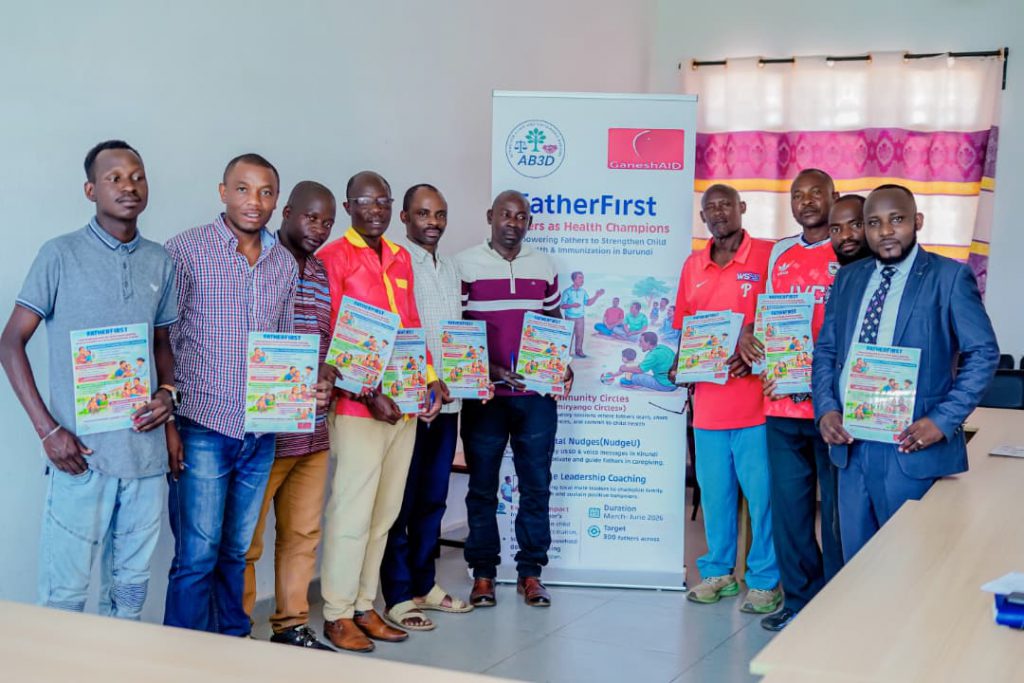
The FatherFirst pilot, implemented by the Burundian Association for Development, Democracy and Human Rights (AB3D) and supported through the KLIC Catalyst Grant, has been designed to address this gap.
The three-month pilot targets 300 fathers across two communes—Kabezi and Nyabiraba—with the objective of strengthening their involvement in child health and vaccination follow-up.
The approach combines three complementary elements. At the community level, small facilitated discussion groups—known as Imiryango Circles—create space for fathers to engage in dialogue on parenting, health practices, and shared responsibility. These sessions bring together groups of 10 to 15 participants and are designed to encourage reflection, peer exchange, and practical understanding.
This is complemented by a simple digital reminder system using USSD and voice messages. Baseline findings show that 95% of participants have access to a mobile phone, while 85% express interest in receiving digital health reminders, providing a strong foundation for this approach.
In parallel, the project works with local leaders—including teachers, religious figures, and community representatives—to support engagement and reinforce messages within the community.

From design to early implementation
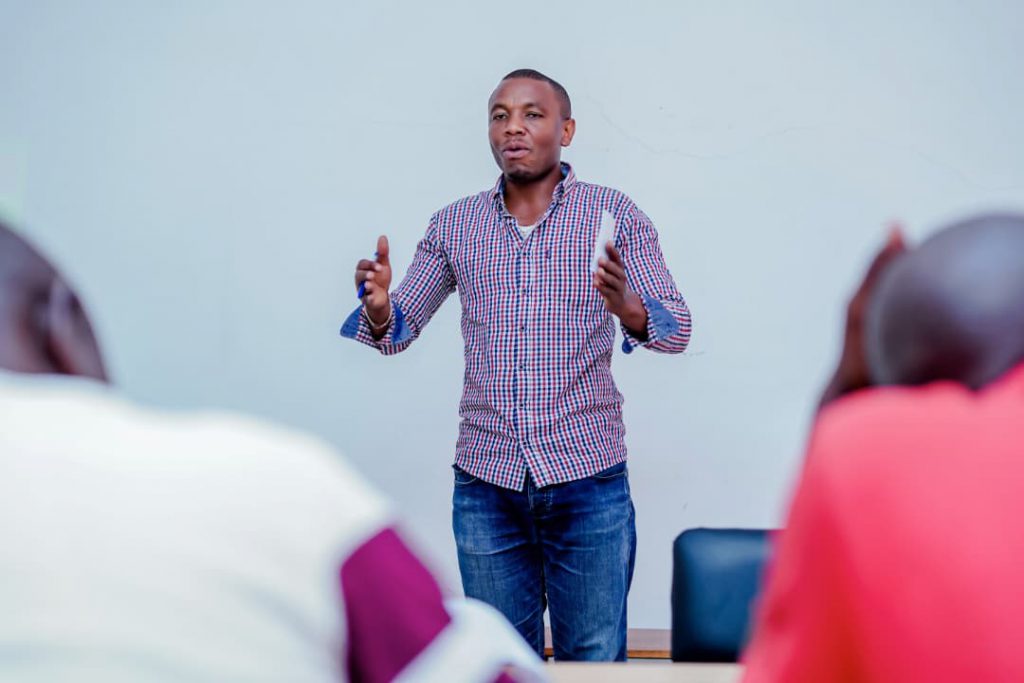
Implementation is currently underway in Kabezi, with facilitators trained and initial sessions launched. At this stage, the focus is on establishing the approach in practice—ensuring that activities are well understood, accessible, and relevant to participants.
This early phase is essential for identifying how fathers respond to participation, how discussions unfold, and what barriers may affect engagement. These insights will inform ongoing adaptation throughout the pilot period.
Implications for child health and immunisation
The baseline findings, combined with early implementation, highlight an important consideration for public health programmes. Improving child health outcomes requires not only service availability, but also effective engagement of those who influence health-related decisions within households.
Fathers are a key part of this dynamic. Their involvement can support more timely care-seeking, reinforce adherence to vaccination schedules, and contribute to more consistent use of health services—particularly in settings where some children remain under-immunised.
A learning-oriented pilot
As a pilot initiative, FatherFirst is designed to generate practical learning. It explores how community dialogue, locally relevant messaging, and accessible digital tools can work together to strengthen engagement and support behaviour change.
The baseline also indicates favourable conditions for implementation, including high mobile phone access and openness among community members and leaders to engage on these issues. At the same time, it underscores the importance of sustained efforts to address deeply rooted social norms.
Supporting country-led innovation
Through the KLIC Catalyst Grant, GaneshAID supports locally led initiatives that are grounded in context and focused on equity.
FatherFirst reflects this approach by building on local knowledge, working through existing community structures, and prioritising practical, adaptable solutions. The aim is not only to support implementation, but also to generate insights that can inform broader strategies in similar settings.
Looking ahead
The FatherFirst pilot remains at an early stage, and its full impact will be assessed over time. However, it already highlights the importance of expanding how engagement in child health is approached.
Reaching children who are under-immunised or at risk of being missed requires engaging all relevant actors within the household. By supporting fathers to become more informed and involved, this approach contributes to more inclusive and effective primary healthcare.
