The Innovation Showcase marked one of the most defining moments of KLIC 2025. It became a moment of validation, where GaneshAID’s innovations were not only introduced, but examined, challenged, and affirmed through the lived experience of global and country partners. It was here that innovation moved beyond concept and design, and into practice, impact, and proof.
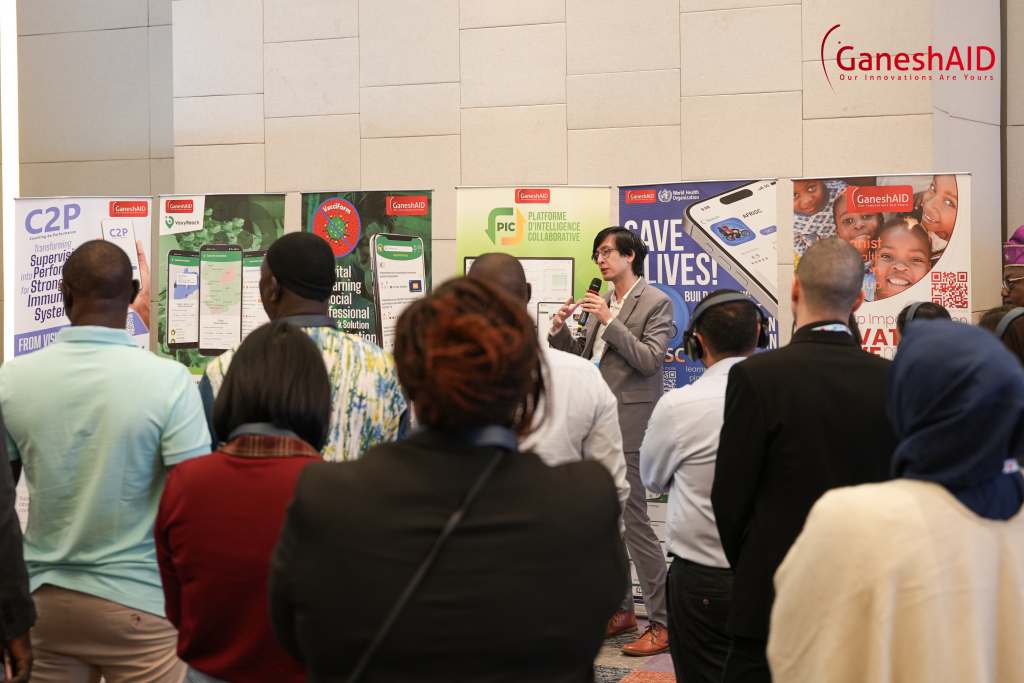
The session opened with GaneshAID’s teams presenting a set of complementary applications, each designed to respond to concrete challenges.
The Intelligence Team first introduced the PIC (Partnership Information & Coordination) platform, developed to address fragmented data and coordination challenges across immunisation ecosystems. PIC provides a shared space where partners can access documents, track activities, and exchange information in real time.
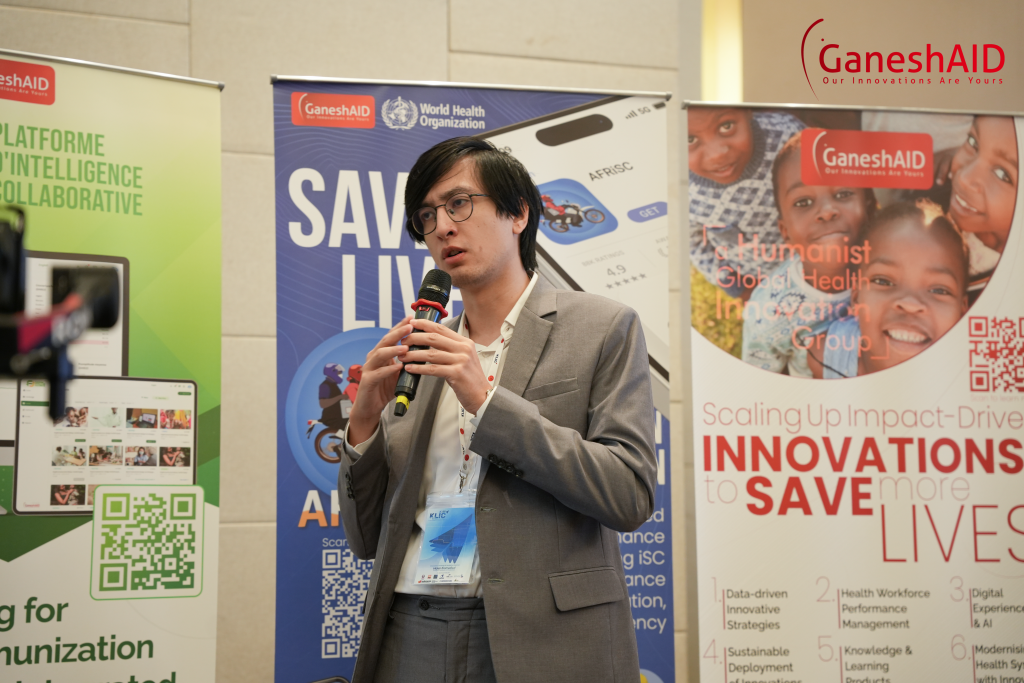
The Smart Team presented C2P (Coach to Perform), a digital performance coaching application designed for immunisation workers and their supervisors. C2P combines self-assessment, peer support, and integrated learning to support continuous performance improvement in day-to-day practice.

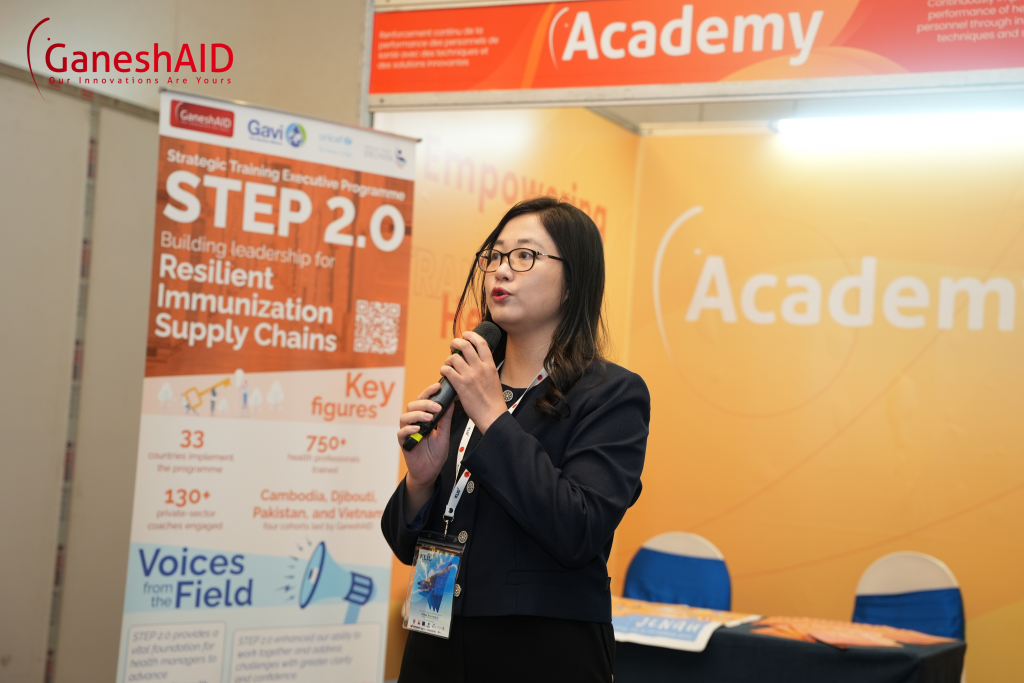
The Academy Team introduced GaneshAID’s Learning Management System, built as micro-learning modules tailored for busy frontline workers. The LMS enables flexible, remote learning and is integrated across GaneshAID’s applications.
What gave the Innovation Showcase its real weight was not only the technology itself, but the voices of partners who have seen these innovations at work within national systems. Their feedback has come as grounded assessments shaped by implementation, coordination challenges, and measurable change.
Representing Gavi, Dr. Thierry VINCENT framed GaneshAID’s innovations as part of a broader shift away from the traditional model of ready-made products toward solutions built through genuine partnership. What stood out to him during the Innovation Showcase was that these tools were not designed in isolation and later introduced to countries, but developed through close collaboration with them from the very beginning.
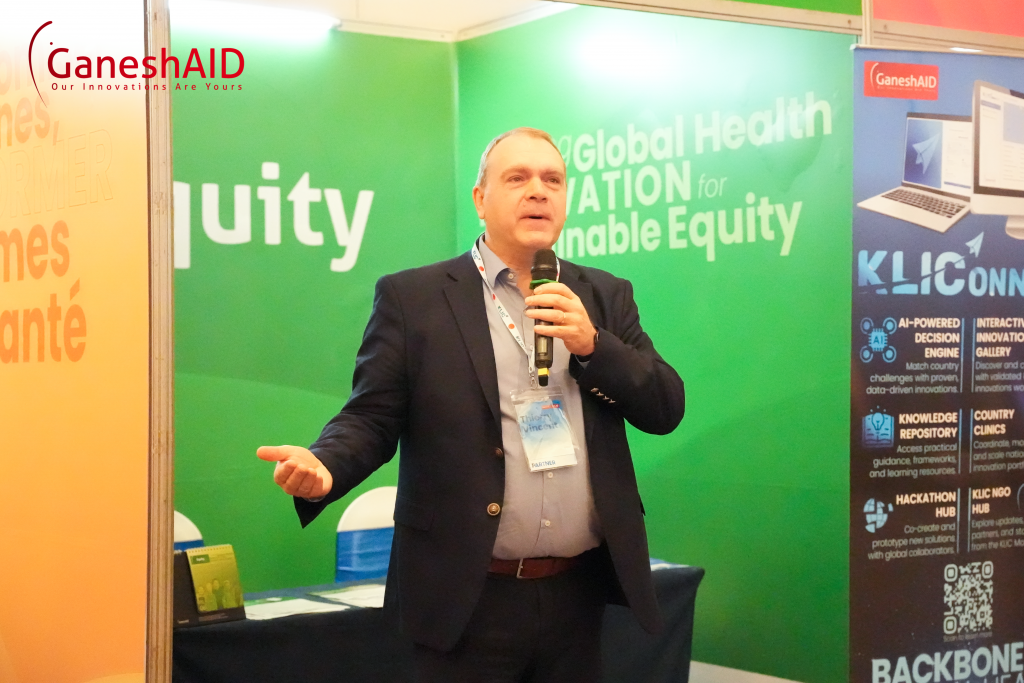
“Innovations should not simply arrive from outside; they must be truly adapted to the context of each country,” he emphasized when explaining how GaneshAID’s innovations have supported Gavi’s long-term ambition to place countries at the center of decision-making.
That country-centered vision was strongly echoed by Dr. Ousseynou BADIANE, Coordinator of the Expanded Programme on Immunization (EPI) at the Directorate of Prevention, Ministry of Health and Social Action in Senegal. Speaking from direct implementation experience, he described how PIC has reshaped coordination by embedding collaboration into everyday workflows rather than treating it as an added layer.
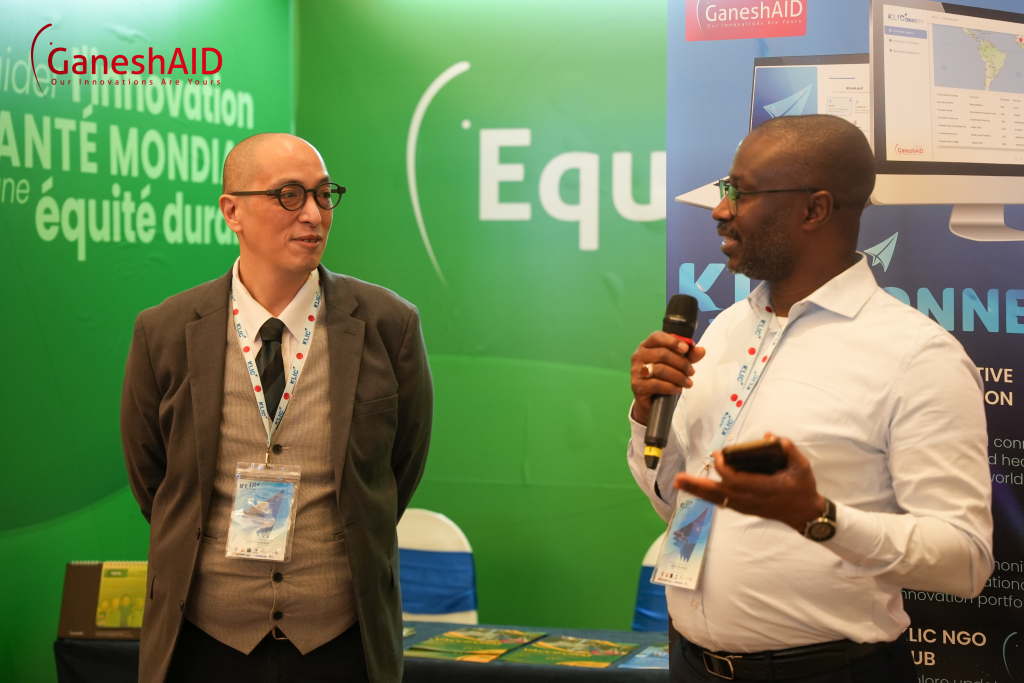
“All our partners are now connected through the platform, exchanging in real time. It has truly improved coordination and the quality of our work,” he said.
On the other hand, Dr Diall IBRAHIM, representing Centre National d’Immunisation (CNI), Mali, grounded the discussion in the realities of system operations and national coordination. He described how GaneshAID’s platforms, particularly the PIC, have transformed the way partners collaborate:
“The difficulty is that partners often operate independently. The PIC centralizes information, brings partners together, and enables timely decision-making.”

Beyond coordination, Dr Diall IBRAHIM also highlighted the importance of responsiveness in public health systems, noting how PIC’s information-sharing features help ensure that issues identified in the field are communicated quickly and addressed without delay.
Complementing these perspectives, Mrs. Yarro Fatimata DIARRA, speaking from her role as a country-level coordinator, described how platforms such as PIC and C2P have become drivers of learning and performance improvement, particularly through their integration with coaching and evaluation mechanisms.
“During supervision, we observed a clear and sudden improvement in performance,” she explained. “When asked what had changed, the supervisor said he had just completed coaching training and learned many things through the platform.”
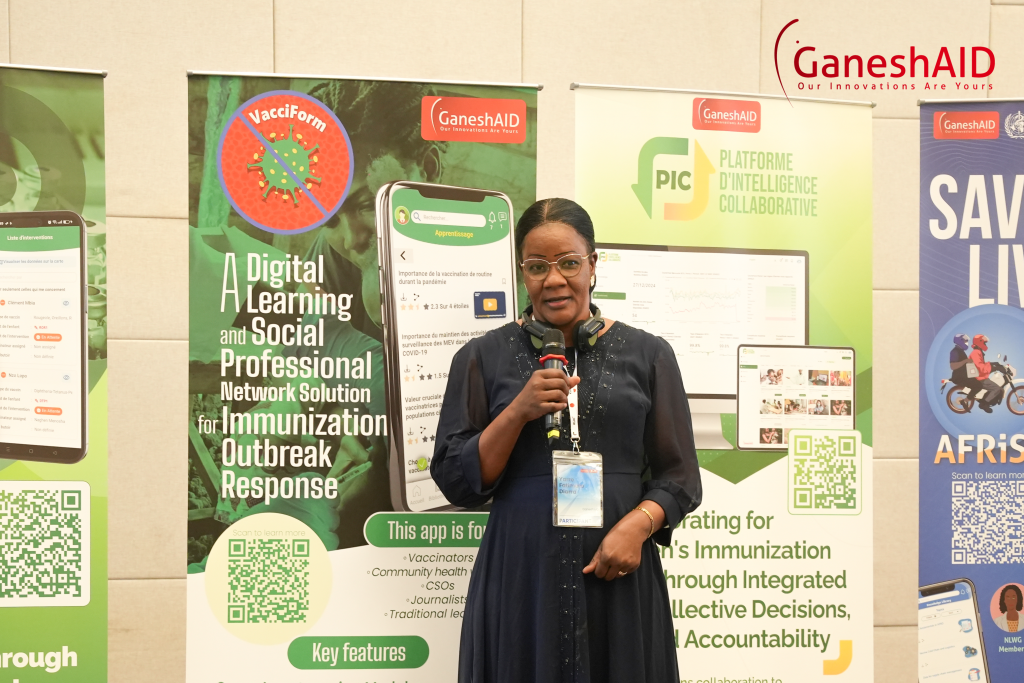
For Mrs. Yarro Fatimata DIARRA, this moment captured the true value of innovation, not as the existence of a platform, but the transformation of everyday practices: “These innovations improve vaccination by changing how people work, not just by introducing new tools.”
For GaneshAID, these insights were both a validation and a responsibility, reaffirming that innovation only matters when it responds to real needs, supports those who deliver care, and evolves alongside the systems it is meant to serve. Looking ahead, GaneshAID remains committed to advancing this approach: designing with countries, learning from practice, and contributing to a future where collaboration drives meaningful change in immunisation and beyond.

 EN
EN  FR
FR